
Short answer: a test lgbt is usually an online questionnaire or reflection guide about attraction, gender, labels or community experiences. A good test LGBT français helps you think through language and boundaries; it does not diagnose you, decide who you are or turn a private experience into a public score.
People search for an LGBT test for different reasons. You may be looking for vocabulary, wondering how an orientation quiz works, preparing a conversation or simply comparing an online questionnaire with the advice you already trust. Those are different tasks. This guide shows how to identify the task a page really supports, how to protect your privacy and how to read an answer without giving a quiz more authority than it deserves.
What a test LGBT can and cannot do
An online LGBT quiz or test LGBT can be useful when it gives you neutral prompts and introduces terms you may want to explore. It can help you notice which questions feel relevant, which words feel comfortable and which topics you would rather leave alone. That is a modest but valid purpose: reflection, not certification.
Most free quizzes are not clinical assessments. Their questions, scoring rules and categories are chosen by the publisher, and two quizzes can produce different outcomes from the same answers. A result may reflect the wording of one page more than it reflects the complexity of your life. Treat it as one conversation starter among many.
| Possible use | What it can offer | What it cannot prove |
|---|---|---|
| Vocabulary | Definitions and prompts for words you may want to research. | That one label is the only correct description of you. |
| Reflection | A private moment to notice feelings, patterns or questions. | A diagnosis, prediction or permanent identity. |
| Conversation | A gentle way to decide what you might discuss with someone trusted. | Consent to share answers or a reason to pressure another person. |
| Education | Links to inclusive explanations and community resources. | Professional support when a situation involves safety, discrimination or distress. |
French wording, labels and context
A French-language quiz can be more comfortable when its terms match the words you actually use. The phrase test LGBT français should lead to plain explanations of orientation sexuelle, identité de genre, expression, attraction and pronouns instead of a long list of labels with no context. Translation matters, but a translated page is not automatically inclusive: the questions and the result language still need to respect uncertainty and personal choice.
A label can be useful without being a test result
Labels can help people find community, describe a feeling or search for information. They can also change over time, stay private or remain intentionally open. A responsible quiz gives you room to say “not sure”, “another word fits” or “I would rather not answer”. It does not frame uncertainty as failure.
Be careful with pages that promise to reveal your “real” orientation in a few clicks. Attraction, identity and relationships do not follow a single scoring formula. If a quiz uses a dramatic result, read the explanation below it and compare the claim with the actual questions. The site's orientation guide provides broader context when you want definitions rather than a score.
How to choose a respectful LGBT quiz
Use this review before entering personal answers. It works for a short playful test LGBT, an educational questionnaire and a longer identity reflection tool.
- Read the purpose first: decide whether the page offers education, self-reflection, a community resource or entertainment. Avoid pages that blur those promises.
- Preview the questions: scan for assumptions about bodies, relationships, age, nationality or family. The right page lets you leave when its scope is not yours.
- Look for flexible answers: “not sure”, “not applicable”, “another term” and “prefer not to say” are useful choices when a binary response would misrepresent you.
- Check the result copy: a careful result describes the quiz and its limits. It should not call a person normal, abnormal, more authentic or less valid.
- Check the audience: adult questions need clear age guidance. A general identity guide should not quietly lead younger readers into mature content.
- Check the exit: you should be able to reset, close the page or stop without creating an account or sending unnecessary personal data.
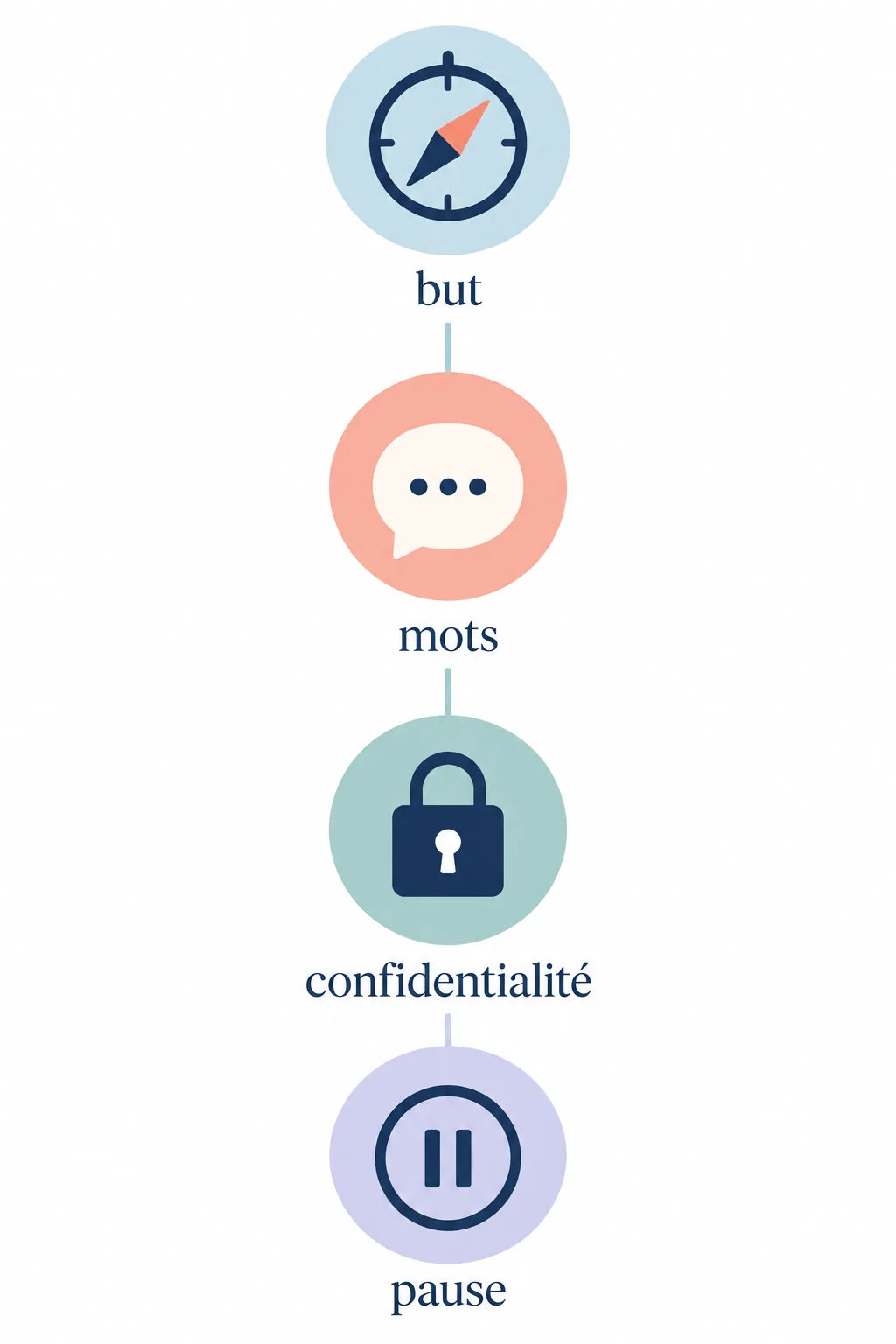
Privacy, consent and safe boundaries
An answer about attraction, gender or relationships can be sensitive even when a test LGBT calls its quiz “just for fun”. Start with the least identifying information possible. Do not enter your real name, school, workplace, private messages or another person's story unless the page clearly needs it and you have chosen to share it.
Read the privacy notice in plain language. Does the tool calculate locally in your browser, send answers to a server or store a result behind an account? Does it use cookies for advertising or analytics? The answer does not automatically make a page good or bad, but you should know what you are accepting. If the explanation is missing, vague or hidden behind a forced sign-up, choose another resource.
Consent also applies between people. A partner, friend, parent or online group should not demand to see your answers. Taking a quiz together can be enjoyable when everyone can pass, but a shared screen is never permission to disclose a private result. If a prompt makes you feel exposed, pressured or unsafe, stop. Your boundary is more important than finishing the questionnaire.
How to read a test LGBT result
Read a test LGBT result inside the scope of the quiz that produced it. Ask which questions influenced it, whether any answers were forced and whether the page explains its scoring. A high or low number is not a measure of courage, authenticity, maturity or belonging. The number may simply reflect which options the author decided to count.
You do not have to choose a label because a page suggests one. You can keep a useful word, set it aside, look for another definition or decide that no label fits today. If the result feels upsetting, close the quiz and speak with someone you trust or consult a community resource rather than taking more quizzes to chase certainty.
Keep different tasks separate. A purity score is not an orientation test, an identity quiz is not a mental-health assessment and a relationship compatibility page cannot decide whether a partnership is safe. The site's inclusive purity guide explains how to review wording and scope when you want a general quiz that welcomes different experiences.
When another resource fits better
Choose an educational guide when you need definitions, history or a glossary. Choose a conversation prompt when your goal is to talk with a partner or friend. Choose a support service when the issue involves harassment, discrimination, outing, coercion or immediate safety. A test LGBT can point you toward a question, but it should not be the only resource for a serious situation.
For an accessible next step, compare the page's audience, language and privacy notes with the English purity test, the age-appropriate test or the site information page. Those links have different purposes; use the one that matches your actual question instead of treating every test as interchangeable.
FAQ about test LGBT
What is a test LGBT?
It is usually an online quiz or reflection guide about attraction, identity or community experiences. It can help you explore language, but it cannot diagnose or assign an identity.
Is a French LGBT quiz scientific?
Most free online quizzes are educational or playful questionnaires rather than validated clinical instruments. Read the method and limits before giving a result much weight.
Does an LGBT test tell me whether I am LGBT?
No. Only you decide which words, if any, describe you. A score is not proof of sexual orientation or gender identity.
Can I take the quiz without sharing my name?
Prefer a page that explains local or anonymous handling, and never provide a real name, contact details or private story when the task does not require them.
What if a question feels unsafe?
Skip it when possible, stop the quiz or close the page. You do not owe an answer to a website or to somebody who is watching you take it.
Summary
A test lgbt can be a useful starting point for vocabulary and reflection when it states its purpose, uses respectful wording, protects privacy and lets you pause. A French LGBT test should make language easier to understand without pretending that a score can define a person. Keep the result in context, choose your own labels and move to a trusted educational or support resource when the question is bigger than a quiz.
For information and self-reflection only. A quiz cannot diagnose an identity, replace professional support or make a decision about your safety.